
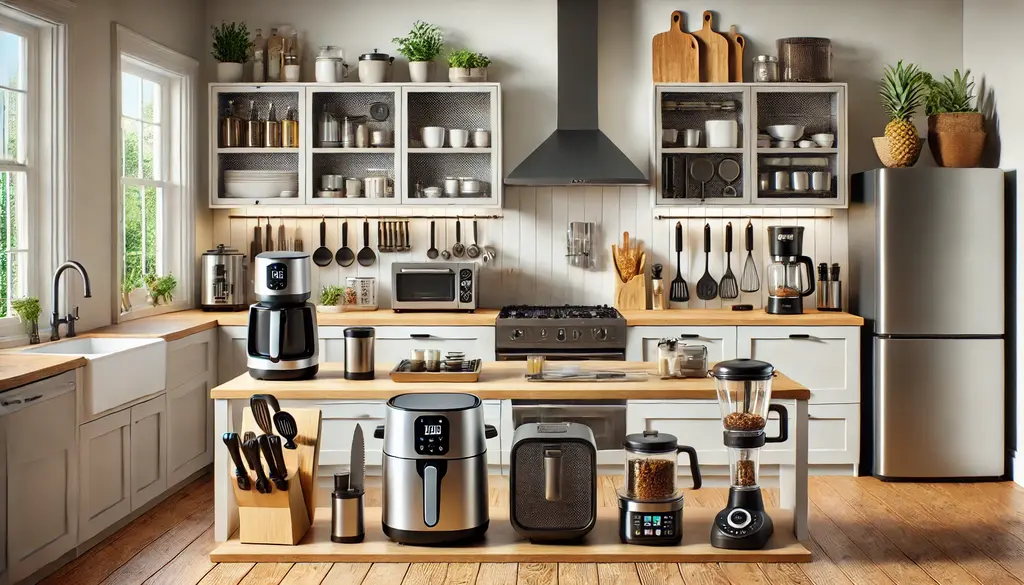
Building a functional kitchen takes time. It does not require filling drawers with single-use gadgets. Focus on versatile items first. These are the workhorses. They perform multiple tasks well. These must-have kitchen gadgets form the foundation of efficient cooking.
This post is all about some must-have kitchen gadgets, offering unique benefits. Each helps achieve better results in various cooking tasks.
Must-Have Kitchen Gadgets
Selecting the right tools is like choosing the right paintbrushes for an artist. Each serves a purpose. Some are versatile staples. Others offer precision for specific details. The focus here is on the versatile staples. Here are some must-have kitchen gadgets that make cooking simpler and better:
1. The High-Quality Chef’s Knife
Every cook needs a good knife. The chef’s knife is the primary workhorse of the kitchen. A sharp, well-balanced chef’s knife speeds up the preparation process. Dull knives slip more easily, increasing the risk of accidents. A quality knife cuts cleanly and efficiently.
What to look for:
- Material: High-carbon stainless steel offers durability, sharpness, and rust resistance. Look for a forged blade. This means it is made from a single piece of steel, offering strength and balance. Stamped blades are thinner and lighter.
- Size and Weight: An 8-inch chef’s knife suits most cooks. It offers sufficient length for slicing large items. It remains manageable for smaller tasks. The knife should feel balanced in your hand.
- Handle: It needs to provide a secure grip, even when hands are wet. Materials like wood, plastic, or composite offer different feels and durability.
- Sharpness: A new knife should be very sharp out of the box. Maintaining this sharpness with regular honing and occasional sharpening is crucial.
Tips for Care:
- Wash by hand immediately after use. Dishwashers can damage the blade and handle.
- Dry thoroughly to prevent rust, even on stainless steel.
- Store properly. Use a knife block, magnetic strip, or blade guard to keep your knives organized and safe. This protects the edge and prevents accidents from occurring.
- Use a honing steel frequently to maintain the blade’s edge. Sharpen the knife with a whetstone or sharpener when honing no longer restores the edge.
- Always cut on a cutting board made of wood or plastic. Avoid glass, stone, or ceramic surfaces. These dull the blade quickly.
2. The Versatile Cast Iron Skillet
Cast iron cookware offers incredible versatility. Searing steaks. Frying eggs. Baking cornbread. Roasting vegetables. Its ability to retain heat evenly is unmatched. This even heat distribution helps cook food perfectly.
Cast iron excels at high-heat searing. It performs well for low-and-slow cooking. With proper care, it develops a natural non-stick surface. It often costs less than comparable stainless steel pans.
What to look for:
- Size: A 10 or 12-inch skillet is a great starting point. This size accommodates cooking for individuals or small families.
- Weight: Cast iron is heavy. Ensure the weight feels manageable. Some modern cast iron is lighter, but traditional pans offer superior heat retention.
- Handle: Look for a sturdy handle. Some skillets have a helper handle on the opposite side. This makes lifting a heavy, hot pan easier and safer.
Tips for Care and Seasoning:
- Seasoning: Cast iron requires seasoning. This involves baking thin layers of oil onto the surface. This creates the non-stick coating. It also protects the pan from rust.
- Cleaning: Wash with hot water and a stiff brush or scraper. Avoid harsh soaps, especially when the seasoning is new. Dry immediately and thoroughly.
- Re-seasoning: After cleaning, apply a very thin layer of cooking oil to the entire surface of the pan. Wipe away any excess. Heat the pan on the stovetop or in a warm oven until the oil is polymerized. This maintains the non-stick surface.
- Avoid extreme temperature changes: Do not put a hot pan into cold water. This can cause it to crack.
3. The Indispensable Digital Kitchen Scale
Measuring ingredients by weight provides far greater precision than measuring by volume. A digital kitchen scale ensures consistent results every time. It helps manage portions accurately. It simplifies the conversion of recipes from volume to weight.
For consistent baking, a scale is essential. Flour, sugar, and other dry ingredients can vary significantly in weight depending on how they are scooped or packed into a cup.
What to look for:
- Capacity: Most home scales handle weights up to 10 or 11 pounds. This is sufficient for typical home cooking and baking.
- Units: Ensure it measures in grams (g) and ounces (oz). Pounds (lb) and milliliters (ml) are also useful options. Easy switching between units is important.
- Tare Function: This is crucial. The tare button allows resetting the scale to zero after placing a container on it. This lets you measure ingredients directly into your mixing bowl. It saves on dirty dishes.
- Readability: A clear, easy-to-read digital display is important. Backlighting helps in dimly lit kitchens.
- Size and Storage: Consider the scale’s footprint on the counter or its ease of storage in a drawer or cabinet.
4. The Essential Instant-Read Thermometer
Knowing the internal temperature of food is critical. An instant-read thermometer provides a rapid, accurate temperature reading. Checking the doneness of meat, poultry, and fish becomes a simple and reliable process.
Guessing doneness leads to dry meat or undercooked food. Food safety guidelines recommend specific internal temperatures to kill harmful bacteria. An instant-read thermometer removes the guesswork. It guarantees that the food is safe to eat.
What to look for:
- Speed: “Instant-read” means getting a reading in a few seconds (usually 2-5 seconds). Faster is better for minimal heat loss from the food.
- Accuracy: Look for thermometers with an accuracy of +/- 1°F or less. Calibration features are a bonus.
- Temperature Range: Ensure the range covers typical cooking temperatures, from refrigeration to frying (e.g., -50°F to 500°F or equivalent Celsius).
- Probe Type: A thin tip probe leaves a smaller puncture hole. A folding probe offers convenience and safe storage.
- Display: A large, backlit digital display is easiest to read, especially when peering into an oven or grill. Waterproof models are easier to clean.
5. The Powerful Immersion Blender
Blenders are great for soups and smoothies. Transferring hot liquid to a blender can be messy and hazardous. An immersion blender, also known as a stick blender, solves this problem. It blends food directly in the pot, pitcher, or bowl.
Its convenience is unmatched for tasks involving liquids. Avoids transferring hot contents between containers. Cleanup is usually just rinsing the blending shaft. It takes up much less storage space than a full-sized blender.
What to look for:
- Power: A higher wattage motor handles thicker mixtures more easily. Look for at least 200-300 watts for basic tasks. More power is better for tougher jobs or frequent use.
- Speed Settings: Multiple speed settings offer more control over texture. A pulse function is also proper.
- Attachments: Some models come with a whisk or chopper attachments. These add versatility, allowing the blender to perform more tasks like whipping egg whites or chopping nuts (though the primary use remains immersion blending).
- Material: Stainless steel shafts are durable and easy to clean. They do not stain or retain odors, unlike some plastic parts.
The Bottom Line
Having the right tools is just the first step. Using them effectively maximizes their value. Learn proper techniques, especially for knife skills. Regular maintenance keeps tools performing their best.
A well-equipped kitchen, centered around these must-have kitchen gadgets, removes frustration. It unlocks culinary potential. It allows you to focus on the creative and enjoyable aspects of cooking.
Stay tuned with HomesHelp for more content like this!
FAQs About Must-Have Kitchen Gadgets
Why are these five specific gadgets considered “must-have” over others?
These five gadgets offer exceptional versatility, addressing fundamental aspects of cooking: efficient preparation (knife), versatile cooking on heat (pan), accuracy (scale), food safety and doneness (thermometer), and easy blending of liquids (immersion blender). They provide the most value for a wide range of cooking tasks compared to more specialized tools.
Is it better to buy expensive versions of these gadgets?
Quality often correlates with price, especially for items like knives and pans. Investing in good quality versions of these must-have kitchen gadgets typically means better performance, greater durability, and longevity. However, excellent mid-range options exist. Research brands and read reviews to find the best balance of quality and value within your budget.
How can I best care for my kitchen gadgets to prolong their lifespan?
Follow the manufacturer’s cleaning and storage instructions. For knives, hand washing and proper storage are key. Cast iron requires specific seasoning and drying. Digital scales and thermometers need careful handling to avoid damage from moisture or drops. Regular maintenance, like knife sharpening, keeps tools in peak condition.
Can I cook well without these specific gadgets?
Yes, skilled cooks can create amazing meals with minimal tools. However, these gadgets significantly simplify tasks, improve consistency, and enhance safety. They make cooking more accessible and efficient for cooks of all levels, helping achieve better results with less effort. They aren’t strictly required, but they make a noticeable positive impact on the cooking process.
What should I consider when adding more kitchen appliances and gadgets after these five?
Consider the types of cooking you do most often. If you bake frequently, a stand mixer or specific baking pans are next. If you love making pasta, a pasta maker can be a useful tool. If you cook for a crowd, a large stockpot is valuable. Choose tools that directly support your culinary interests and needs. Focus on versatility and quality over quantity.


