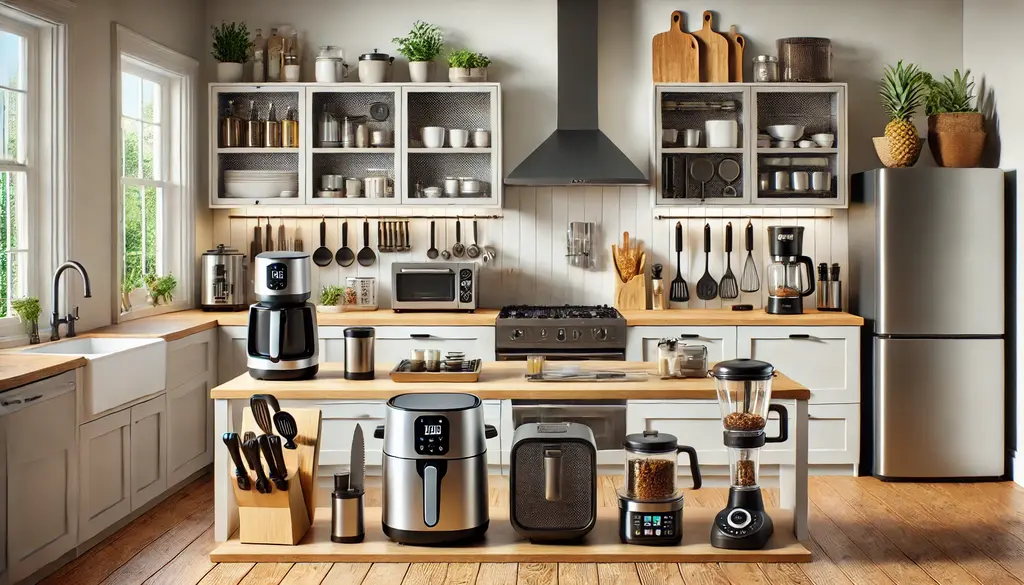

Thinking about giving your kitchen cabinets a facelift, but feeling stuck between refacing and completely replacing them?
You’re not alone. It’s one of the most common dilemmas homeowners face when planning a kitchen update. On one hand, a full replacement promises a dramatic transformation. On the other hand, refacing seems like a faster, more budget-friendly option.
But which is truly the right choice for your kitchen? And what are the real costs, benefits, and headaches involved in each?
This guide cuts through the confusion. We’ll dive deep into cabinet refacing and replacing, breaking down:
- Exactly what each process involves
- The true costs (and what influences them)
- The major pros and cons you need to consider
- How to decide which option makes the most sense for your budget, timeline, and goals
By the end of this article, you’ll have the clarity you need to make an informed decision about your cabinet upgrade, saving you time, money, and potential regrets. You’ll also be well-informed to distinguish between cabinet refacing and cabinet replacing
Let’s figure out the best path forward for your kitchen. 
Understanding Cabinet Refacing: A Kitchen Facelift
So, what exactly is cabinet refacing?
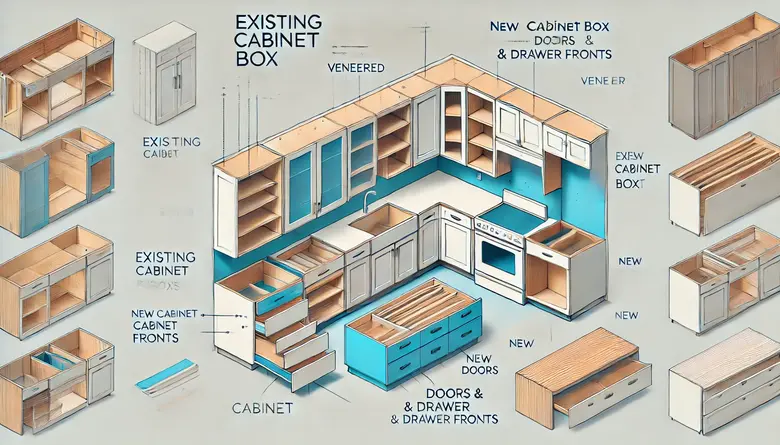
Think of it as a comprehensive cosmetic makeover for your existing cabinets. Instead of tearing out all the cabinet boxes (the frames and internal structure attached to your walls), you keep them in place. The exterior of the cabinet boxes, drawers, and doors gets a brand new look.
The Refacing Process:
- Preparation: Existing cabinet doors and drawer fronts are removed, and the surfaces of the cabinet boxes are thoroughly cleaned and prepped.
- Applying New Surface: A new veneer (either real wood veneer or a durable laminate) is applied directly to the exposed surfaces of the cabinet boxes – the front frames, sides, and toe kicks. This instantly changes the color and material look of the structure.
- New Doors and Drawer Fronts: Brand new, custom-made doors and drawer fronts are installed. These are made to match the new veneer and can be a completely different style than your old ones (e.g., going from flat panel to shaker style).
- New Hardware: New hinges, handles, and pulls are installed, completing the transformation.
- Optional Additions: New molding, trim, glass inserts, or other decorative elements can be added for a custom look.
Pros of Cabinet Refacing:
- Cost-Effective: Generally significantly less expensive than a full cabinet replacement (more on costs below!).
- Faster Turnaround: The process is much quicker than replacing cabinets, often completed in just a few days to about a week, depending on kitchen size. This means less disruption to your daily life.
- Less Mess & Disruption: Since the boxes stay put, there’s no major demolition mess or structural changes. Your kitchen is usually functional (though maybe messy) during the process.
- Eco-Friendly: Keeps perfectly good cabinet boxes out of the landfill, reducing waste.
- Maintains Layout: If you’re happy with your current kitchen layout, refacing is ideal as it doesn’t require changing the footprint.
Cons of Cabinet Refacing:
- Relies on Existing Structure: If your cabinet boxes are structurally unsound, damaged by water, or poorly configured, refacing won’t fix these underlying issues.
- Limited Layout Changes: You cannot change the layout or add/remove cabinets easily. You’re stuck with the existing footprint.
- Interior Remains the Same: The inside of your cabinets (shelves, drawers, pull-outs) typically remains as is, unless you specifically pay for upgrades.
- Can Still Be an Investment: While cheaper than replacing, it’s still a significant remodeling expense.
- DIY Potential is Low: Refacing requires precision and specialized tools for applying veneer and fitting doors perfectly; it’s typically a job for professionals.
Refacing is Ideal When
Your existing cabinet boxes are structurally sound and in good condition, you are happy with your current kitchen layout, your primary goal is to update the look of the cabinets, and budget and time savings are major priorities.
Understanding Cabinet Replacing: A Fresh Start
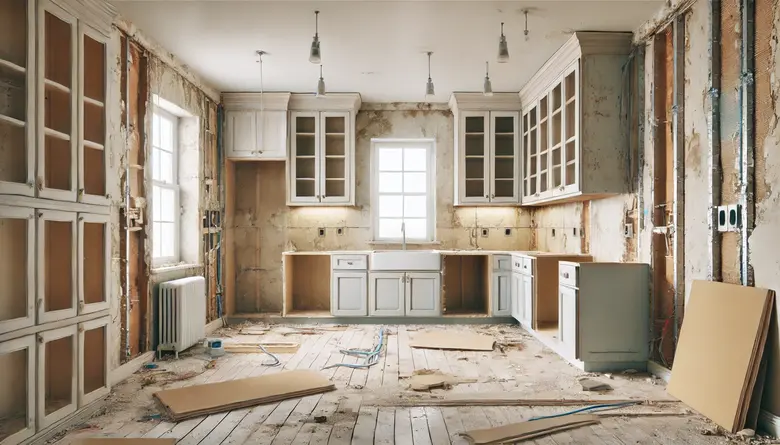
Cabinet replacement is precisely what it sounds like: you remove the old cabinets entirely and install brand new ones. This is a much more involved process than refacing and offers the most dramatic change.
The Replacing Process:
- Demolition: The old cabinets are entirely removed, which can be a messy process that requires careful disconnection of plumbing (such as the sink) and potentially electrical components (under-cabinet lighting).
- Wall Preparation: Once the cabinets are removed, the walls may require repair, patching, or even minor structural modifications, especially if the layout is being changed.
- Installation: New base and wall cabinets are installed. This often involves anchoring them to wall studs and ensuring everything is level and plumb.
- Countertops & Backsplash: In most cases, replacing cabinets requires replacing countertops and often the backsplash, as they are typically removed or damaged during demolition and installation.
- Fixture Reconnection: Plumbing for sinks and potentially electrical for lighting or appliances are reconnected.
- Hardware & Finishing: New hardware is installed, and any final trim or molding is added.
Pros of Cabinet Replacing:
- Complete Transformation: Enables a comprehensive overhaul of style, layout, size, and functionality. You can add islands, change cabinet heights, or improve workflow.
- Fix Underlying Issues: Addresses any structural problems with old cabinets or allows for updating plumbing and electrical systems while the walls are open.
- Maximizes Home Value: Often provides a higher perceived value and return on investment (ROI) compared to refacing, especially in older kitchens that require a significant update.
- New Interior Features: You get all-new shelving, drawers, and can customize internal storage solutions from scratch.
- Wide Range of Options: Access to the full spectrum of cabinet materials, styles, and features available on the market.
Cons of Cabinet Replacing:
- Much Higher Cost: This is the most significant drawback. Replacing cabinets is substantially more expensive than refacing.
- Longer & More Disruptive: The process takes longer (weeks, not days) and renders your kitchen completely unusable for cooking and cleanup for most of this time. The disruption is significant.
- Requires Other Updates: Almost always necessitates replacing countertops and sometimes flooring or lighting, adding to the overall cost and complexity.
- More Waste: Generates a large amount of demolition waste.
- Higher Chance of Unexpected Issues: Opening up walls and floors can reveal unforeseen problems, such as plumbing leaks and electrical issues, that add to the timeline and budget.
- DIY Potential is Limited: While basic cabinet hanging is possible through DIY, designing a new layout, complex installations, and coordinating with plumbing and electrical systems make it a job usually best left to professionals.
Replacing is Ideal When
Your existing cabinet boxes are damaged, poorly constructed, or not salvageable. You want to change the layout or footprint of your kitchen, need updated internal storage features, are undertaking a more extensive kitchen remodel, and your budget is less of a constraint.
Cabinet Refacing vs. Replacing: The Critical Comparison
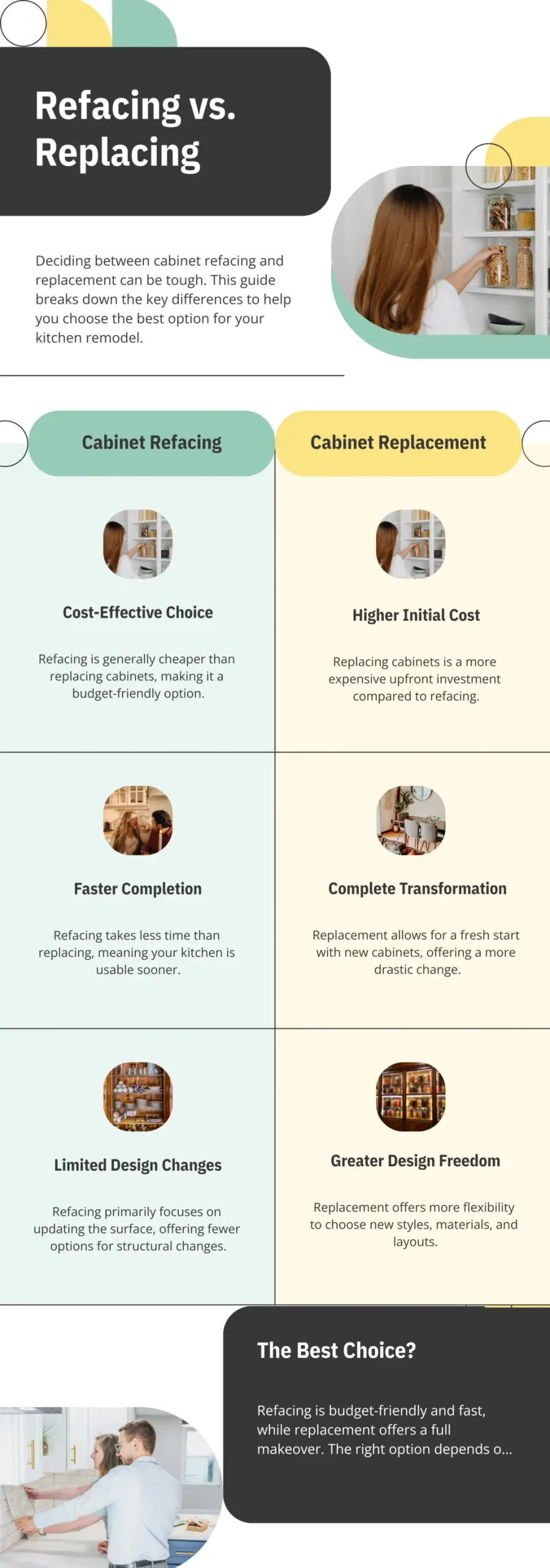
Now that we’ve looked at each option individually, let’s compare them head-to-head on the factors that matter most.
Cost
This is often the deciding factor. Refacing is consistently less expensive than replacing, but the exact cost difference can vary greatly depending on kitchen size, materials chosen, and labor rates in your area.
- Cabinet Refacing Cost: On average, cabinet refacing costs can range from 50% to 70% less than replacing. While estimates vary, a typical refacing project for a standard-sized kitchen is expected to cost anywhere from $5,000 to $13,000. Factors like the size of your kitchen, the material of the new veneer (laminate vs. wood), and the complexity of the cabinet layout will influence the final price.
- Cabinet Replacing Cost: This is a much larger investment. The cost depends heavily on the size of your kitchen and the type of cabinets you choose (stock, semi-custom, or custom).
- Stock Cabinets: The most budget-friendly, pre-built sizes. Replacing stock cabinets might range from $10,000 to $20,000 or more.
- Semi-Custom Cabinets: Offer more sizes and styles. Replacing with a semi-custom option might range from $15,000 to $30,000 or more.
- Custom Cabinets: Built to fit your space perfectly. The cost can easily range from $30,000 to $50,000, or even higher for large, luxury kitchens.
- Total Replacement Cost: Remember, replacement often requires new countertops (averaging $2,000 – $4,000+) and backsplashes ($1,000 – $2,000+), plus potential plumbing and electrical work, significantly increasing the total project cost beyond just the cabinet boxes themselves.
Key Takeaway on Cost: Refacing provides a dramatic visual update at a fraction of the cost of a full replacement, making it an excellent value option for many homeowners who are happy with their current layout and box structure.
Time & Disruption
- Refacing: Typically takes 3-7 days. Your kitchen might be usable in the evenings, though surfaces will be covered. The disruption is minimal compared to replacement.
- Replacing: Typically takes 1-3 weeks or longer, depending on the scope (including countertop fabrication/installation). Your kitchen will be unusable for cooking and cleanup for most of this time. Expect significant disruption.
Return on Investment (ROI)
Both upgrades can improve home value, but replacement often yields a slightly higher ROI percentage in real estate value reports. However, refacing provides a strong ROI relative to its lower cost.
The key is whether the upgrade aligns with the home’s value and neighborhood expectations. A high-end replacement in a low-value home might be over-improvement, while refacing might be just right.
Design Flexibility
- Refacing: Limited to the existing layout. You can change door styles and finishes, but you cannot easily add cabinets, adjust heights, or relocate appliances that require cabinet modifications.
- Replacing: Offers ultimate flexibility. Change the layout, add cabinets, create an island, change appliance locations, and incorporate custom storage solutions.
Durability & Quality
- Refacing: The durability of the new doors and veneer depends on the quality of the chosen material. The underlying structure’s durability depends on the original cabinet boxes.
- Replacing: Durability depends on the quality of the new cabinets purchased (material, construction method). Offers the chance to upgrade to higher-quality boxes if desired.
Cabinet Refacing vs. Replacing: Which Option is Right for YOU?
Choosing between refacing and replacing comes down to balancing your priorities. Ask yourself these key questions:
- What’s Your Budget? If your budget is limited, refacing is likely the only viable option for a significant update. If you have a larger budget, replacement is possible.
- Are You Happy with Your Current Layout? If you love your kitchen’s current flow and footprint, refacing is a strong contender. If you need more space, want to move appliances, or change the workflow, replacement is necessary.
- What is the Condition of Your Existing Cabinet Boxes? If they are solid, sturdy, and well-maintained, refacing is a good possibility. If they are water-damaged, falling apart, or poorly constructed, replacement is the way to go.
- How Much Disruption Can You Tolerate? Refacing is fast and relatively clean. Replacement will put your kitchen out of commission for a longer period.
- What’s Your Desired Aesthetic Change? Refacing offers dramatic style updates. Replacing offers complete freedom to achieve any look and layout.
- Is This Part of a Larger Remodel? If you’re already gutting the kitchen and changing flooring, countertops, and plumbing, replacing cabinets often makes sense as part of that larger project.
In Summary
- Choose Refacing If: Your boxes are good, you like the layout, budget, and time are key constraints, and you primarily want a fresh look.
- Choose Replacing If: Your boxes are in poor condition, you need a new layout, your budget is less restrictive, and you want a complete kitchen transformation.
Conclusion
Deciding whether to reface or replace your kitchen cabinets is a significant decision with real implications for your budget, timeline, and the final look and functionality of your kitchen.
While refacing offers a faster and more affordable way to achieve a dramatic aesthetic update, replacement provides the opportunity for a complete transformation, including layout changes and addressing underlying structural issues.
By carefully assessing the condition of your existing cabinets, evaluating your budget and timeline, and considering your long-term goals for your kitchen, you can confidently choose the option that best fits your needs.
Both can lead to a beautiful, updated kitchen – the “right” choice is simply the one that aligns best with your situation.
Stay tuned with HomesHelp for more content like this!
FAQs
1. Is cabinet refacing significantly cheaper than replacing?
Yes, generally. Cabinet refacing typically costs 50% to 70% less than a full cabinet replacement. The exact savings depend on kitchen size, materials, and labor, but it’s consistently the more budget-friendly option for updating the look.
2. How long does cabinet refacing or replacing take?
Cabinet refacing is much faster, usually taking only 3 to 7 days. Cabinet replacement is a more involved process that typically takes 1 to 3 weeks or even longer, especially when factoring in countertop and backsplash work.
3. Can I do cabinet refacing or replacing myself (DIY)?
While basic tasks in replacement (like removing old cabinets) are possible DIY, both refacing and replacement are complex jobs requiring significant skill, specialized tools, and knowledge of construction, plumbing, and potentially electrical work. Refacing (applying veneer, fitting doors) is particularly difficult to do well without professional experience. Most homeowners opt to hire professionals for both.
4. Does cabinet refacing or replacing add more value to my home?
Both can increase home value, but a full cabinet replacement often yields a slightly higher return on investment (ROI) in real estate valuations compared to refacing. However, refacing provides strong value relative to its lower cost, and the “best” choice depends on aligning the upgrade with your home’s overall value.
5. What materials are typically used for cabinet refacing?
Cabinet refacing involves applying new veneer (either real wood veneer or a durable laminate, like thermofoil) to the existing cabinet boxes. New custom-made doors and drawer fronts are added, which can be made from various materials including solid wood, MDF, or particleboard with a veneer or laminate finish, matching the style and color of the new veneer.