

Going solar doesn’t always mean cutting ties with the grid. On-grid solar systems give you solar power plus the security of backup electricity. It’s the most common setup in U.S. homes, and for good reason: lower bills, fewer hassles, more control.
Let’s discuss it in detail!
What is an On-Grid Solar System?
An on-grid solar system is also called a grid-tied system. It connects to the local utility grid. This system is the most common for homes. It uses solar power and grid power. During the day, panels make electricity. That electricity runs your home. If panels make extra power, it goes back to the grid.
In the U.S., this works with net metering. Net metering gives you credit for extra power. The meter runs backward when you send power. The credits help you later. You can use them at night or on cloudy days. This lowers your bills.
An on-grid system does not need batteries. This makes it cheaper. It is also easier to install than an off-grid system.
How Do On-Grid Solar Systems Work?
The working of on-grid solar systems is easy to understand.
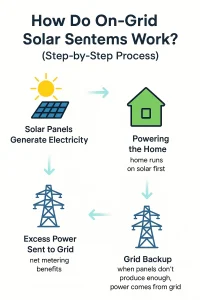
- Daylight Electricity Generation: Solar panels have special cells. These cells take in sunlight and turn it into direct current (DC) power. This is called the photovoltaic effect.
- Conversion to AC Electricity: The DC power goes to the inverter. It changes DC power into alternating current (AC). Homes and businesses use AC power.
- Utilization of Electricity: The AC power runs your lights, fans, and appliances. The energy is used right away to meet the daily needs of the home.
- Excess Energy Export: Sometimes panels make more power than you need. The extra power goes back to the grid. A two-way meter measures this flow.
- Net Metering Credits: The meter gives you credits for extra energy. Credits lower future electricity bills. Rules are different in each region. Most programs give rewards for clean energy.
- Grid Connection Stability: The grid keeps your power steady. If panels do not make enough power, the grid supplies it. This means you always have electricity.
Benefits of On-Grid Solar Systems
Grid-tied solar systems have great advantages for homeowners.
- Lower Electricity Bills: This is the biggest benefit. You make your own electricity. This greatly lowers the amount of power you need to buy. Net metering helps with this. Any extra power you make is sent to the grid. You get credit for it. You can use these credits at night or on cloudy days. Your bill often becomes just a small service charge.
- No Need for Batteries: Off-grid systems need expensive batteries. On-grid systems do not. The utility grid works as your backup power. This gives you reliable energy all the time. This makes the first cost of installation much lower. It also removes the cost and trouble of replacing batteries later.
- Simple and Scalable: On-grid systems are simpler to install. They are also easier to maintain. They have fewer components. This makes them easy to expand. If you need more power later, you can just add more panels to your system.
- Eco-Friendly Choice: Using solar power reduces your need for fossil fuels. This helps lower your carbon footprint. When you switch to solar, you help create a cleaner planet. This is why solar is so popular in sunny states. In places like California, Arizona, and Texas, it’s a good financial and environmental choice.
Challenges & Limitations of On-Grid Solar Systems
On-grid solar systems are a good choice for many. However, they have some limits you should know about.
- You Depend on the Grid: This is the main drawback. An on-grid system needs the utility grid to work. For safety, your solar system shuts down during a power outage. This stops your panels from sending electricity to the grid. It protects utility workers. So, your home will not have power during a blackout. This is true even on a sunny day. To have power during an outage, you need to add a battery backup system. This creates a more expensive “hybrid” system.
- Policy Changes Can Hurt Savings: The money you save with an on-grid system depends on policies. Net metering is an example. These rules can change. Most states give you credit for the power you send them. But some are now paying less for it. A good deal now might not be as good in the future. This could affect your long-term savings.
- No Power at Night or on Cloudy Days: Your solar panels only make electricity when the sun is out. At night, or when it’s very cloudy, your system uses power from the grid. A standard grid-tied system cannot make you fully independent from the utility company.
Costs of On-Grid Solar Systems in the US
The initial cost of an on-grid solar system may look high. You should look at the full financial picture that includes all possible savings. In 2025, the average U.S. home system costs $15,000 to $25,000. This price is before any incentives are applied.
Here is what that money pays for:
- Panels and Inverter: These are the main parts of the system. They take up a big share of the cost.
- Installation: This covers the labor to set up the panels. It also covers the wiring work.
- Permits and Fees: Local governments require permits. They also require inspections. These steps make sure the system is safe and installed correctly.
The final price can change by location. For example, the cost in California is not the same as in the Midwest or South. This is because labor costs and competition are different.
The biggest saving comes from the Federal Solar Tax Credit. In 2025, you can get a 30% tax credit on the system’s total cost. This lowers the federal tax you owe. Many states and utilities also offer incentives. These can be rebates or extra tax credits. California and New York have strong rebate programs. Texas gives a property tax break for solar value. These savings can lower your out-of-pocket cost a lot.
Who Should Consider an On-Grid Solar System?
An on-grid solar system is a great choice. But it is not for everyone. It works best for a specific type of homeowner.
Who it is perfect for:
- Homeowners with reliable grid access: This system is ideal if you live in an urban or suburban area. You have a stable utility grid with no frequent power outages. You get to use your solar power. You also have the security of the grid as a backup.
- People who want lower bills: This system is a best fit if your main goal is to save money on electricity. You also want to reduce your carbon footprint. You get the benefits of solar without the extra cost and complexity of a battery system.
- Households that use a lot of power during the day: You can maximize your solar savings if you use a lot of electricity during daylight hours. This is true if you work from home, run a small business, or have a busy family. You use the energy as soon as you produce it.
Who it might not be for:
- People in remote areas: An on-grid system won’t work for you if your home is in a rural area. The grid there may be unreliable or not exist. An off-grid or hybrid system with a battery backup would be a much better choice.
- Anyone who needs power during a blackout: An on-grid system shuts down during a power outage for safety. It will not provide backup power. If you need a consistent power supply during blackouts, you should consider a hybrid system with batteries.
FAQs about On-Grid Solar Systems
What is an on-grid solar system?
An on-grid solar system is also called a grid-tied system. It connects to your local utility grid. It is the most common system for homes. You use solar power during the day. You use grid power when you need extra. Extra energy from your panels goes back to the grid. You get credits for this power.
How do on-grid solar systems work?
Solar panels collect sunlight. They turn sunlight into electricity. The inverter changes this into AC power. AC power runs your lights and appliances. Extra power goes to the grid. You get credits through net metering. At night or on cloudy days, you use grid power.
What are the main benefits of an on-grid solar system?
The main benefit is lower electricity bills. Net metering credits help reduce costs. You do not need batteries because the grid is your backup. The system is easy to install. It is simple to expand later. It is also good for the environment.
What are the challenges of an on-grid solar system?
The system shuts down during blackouts. This happens even on sunny days. Savings depend on net metering rules. These rules are different in each state. Solar panels only make power in the day. You still need the grid at night or in bad weather.
How much does an on-grid solar system cost in the U.S.?
In 2025, most systems cost $15,000 to $25,000. This is before incentives. The price includes panels, inverter, installation, and permits. Federal tax credits can cut the cost by 30%. State rebates can also lower the cost. These savings make the system more affordable.


