Ever stared up at your ceiling during a rainstorm, half-hoping it holds just one more season? Or felt your building turn into an oven every summer afternoon? If so, you’re not alone—and your roof might be begging for help. But before you start planning for a full-blown replacement (and the mess and cost that comes with it), there’s a much smarter option that’s been gaining traction: elastomeric roof coatings.
These coatings aren’t just a quick fix or some trendy buzzword—they’re a practical, long-lasting way to seal, protect, and cool your existing roof without tearing it off. In this guide, we’ll walk you through how they work, why so many property owners are turning to them, and how they can stretch your roof’s life and your dollar at the same time.

What Are Elastomeric Roof Coatings?
If you’ve ever sat through a storm with towels on the floor or felt like your building was baking under the summer sun, you already get it — your roof does a lot more than just sit up there. It’s your first line of defense, and when it starts to wear out, everything beneath it pays the price. That’s where elastomeric roof coatings quietly step in—not as hype, but as a practical game-changer.
These coatings aren’t just some souped-up paint. They’re built from tough, stretchy materials—think polymers and resins—that move with your roof instead of fighting against it. In hot summers, cold winters, and sudden rainstorms; the coating flexes, seals, and stays intact. It goes on like a liquid, but dries into a thick, rubbery skin that blocks out water, reflects heat, and helps your roof roll with the punches year after year.
The real magic is you don’t have to rip up your roof to fix it. Elastomeric coatings give aging, beat-up surfaces a second shot without all the mess and cost of starting from scratch. That’s why more people—from store owners to school facility crews—are choosing coatings over full replacements. It’s smarter, cleaner, and just makes sense.
Read more: How to Handle Emergency Roof Repair Without the Panic
Why More Building Owners Are Switching to Elastomeric Coatings
Nobody gets excited about a full roof replacement. It’s noisy, pricey, time-consuming, and for a lot of buildings, totally unnecessary. That’s why more and more property owners are skipping the tear-off and going for something smarter: elastomeric roof coatings.
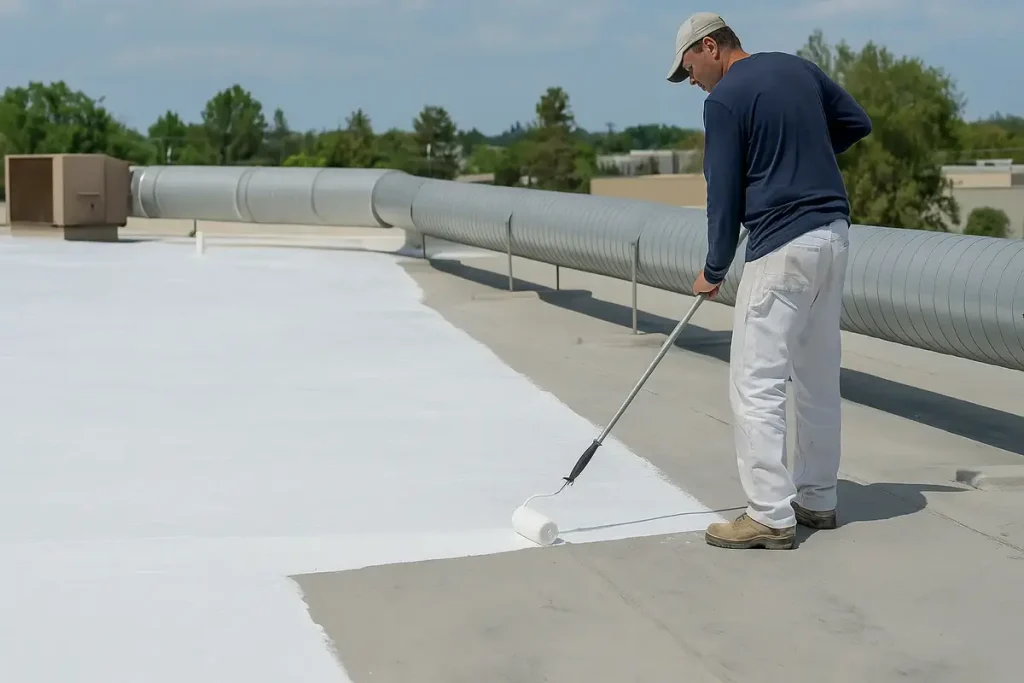
These coatings go on like a liquid, which means they can hug just about any roof surface—metal, concrete, foam, even roofs that have seen better days. But once they cure; they lock into a seamless, watertight shield that holds up against heat, rain, UV rays, and all the seasonal chaos your roof deals with.
What makes them really worth it is the peace of mind. No more stress about leaks popping up where two materials meet. No more patchwork repairs every rainy season. Just a smooth, flexible layer that moves with your building and keeps things dry and cool.
And here’s the kicker: these coatings don’t just buy you time—they can give your roof another 10 to 20 years of life. That’s a solid couple of decades without major roofing drama. So it’s no wonder more building owners are making the switch. It’s smart protection without the chaos.
Tailored for Flat and Low-Slope Roofs
If you’ve ever walked across a flat roof after a storm and found yourself stepping around puddles days later, you already know the issue. Flat and low-slope roofs just don’t drain like pitched ones do—and when water sticks around, it doesn’t play nice with roofing materials.
That’s where elastomeric coatings really shine. They don’t just sit on the surface; they grip it. Tight. Once applied, they cure into a flexible, waterproof shell that stretches across the roof without seams, gaps, or those usual trouble spots where water loves to sneak in. It’s one solid layer of defense that holds strong, even when the roof holds water.
This is especially handy for older buildings—schools, warehouses, small strip malls—the ones built before modern drainage standards were a thing. Back then, it was normal for roofs to pond a little. Elastomeric coatings offer a modern-day fix that doesn’t involve tearing the place apart. They let you work with what you’ve got—and still protect it.
So if your roof is more flat than sloped, and you’re tired of chasing leaks after every storm, this might just be the smartest update you’ll make.
Built to Handle Real Weather
Your roof doesn’t get to live in a climate-controlled lab. It takes whatever the sky decides to throw at it, whether that’s blistering heat, pounding rain, freezing nights, or whipping winds. That’s why elastomeric coatings are designed for real-world abuse—not just textbook specs.
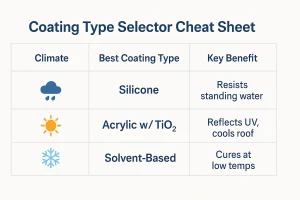
Take summer, for example. When the sun’s beating down and the roof feels like a frying pan, certain coatings—especially those with reflective minerals like titanium dioxide—can drop surface temps by as much as 60 degrees. That’s not marketing fluff; that’s real relief for your AC and your energy bills.
When it comes to rain, it’s all about using the right formula. Water-based coatings need clear skies to cure, sure—but if you’re in a damp or unpredictable climate, silicone and solvent-based options step in like pros. They handle wet weather without flinching, season after season.
And cold? Not a deal-breaker. Some coatings can still do their job in the low 30s, as long as you dodge frost and early morning dew. It’s just about knowing your window and picking your moment.
Even wind can be a slow, silent roof killer—especially when debris gets involved. But elastomeric coatings create a kind of flexible armor that holds up when things get wild. They don’t crack, peel, or fall apart with every temperature swing. They just keep doing their job, quietly, day after day.
Types of Elastomeric Roof Coatings
Elastomeric coatings cover a lot more than just one type of roof. Each variety brings its own unique strength and place where it shines. Let’s walk through the most common ones — so you can pick what’s right for your roof and climate.
Modified Asphalt
In modified asphalt coating, they mix asphalt with a dash of rubber to give some flexibility, and they’re often used on flat or slightly sloped roofs.
But here’s the honest truth: being only available in black isn’t just a color choice—it’s a liability. On sunny days, uncoated modified asphalt roofs can soar 60–90°F hotter than white reflective ones. That extra heat doesn’t stay put—it invades your living or working space, forcing your AC to compensate. Plus, over the years, this stuff takes a beating from grease, chemicals, and sun—drying out, cracking, and breaking down sooner than you’d like.
Still, if you’re in cooler weather and need a quick, cost-effective fix that won’t break the bank, it can be a practical, short-term solution..
Silicone Roof Coatings
If your roof faces constant moisture, humid air, or standing water, silicone coatings are one of the best tools in your corner. What sets them apart is that they don’t just withstand wet conditions — they thrive in them.
Silicone coatings cure with the help of moisture in the air. That’s a huge plus in rainy or coastal regions where other coatings might struggle to dry. Once cured, they form a seamless, rubber-like layer that resists ponding water — no seams, no leaks.
They also pack serious power against the sun. Many high-quality silicone coatings reflect up to 90% of UV rays, which can cool roof surfaces by as much as 50°F. That kind of drop matters — it can ease the load on your air conditioner and help lower your energy bills.
Silicone stays flexible in cold weather and doesn’t get brittle in extreme heat. It holds up through hail, wind, and sun — without chalking, cracking, or peeling. In fact, with proper prep and occasional cleaning, these coatings can add 10 to 20 years to the life of a roof.
Silicone isn’t just for stormy climates — it’s for anyone who wants long-lasting, low-maintenance protection that holds up no matter what the weather throws at it.
Neoprene
Neoprene-based coatings stretch and bounce back — often recovering up to 1,000% of their original length after being stretched. That makes them great for roofs that need to move with the seasons without cracking.
They’re also water-based, eco-friendly (no nasty fumes), and self-level to fill cracks and seal seams. Even better? Some formulations are self-healing — tiny scratches or cuts can seal themselves over time. Neoprene bonds well to metal, concrete, foam. But they do need a UV-resistant topcoat if used outside.
Butyl Rubber
If your roof battles standing water, cold, or dampness — butyl rubber is built for it. This material is among the most water-resistant coatings you can buy and is perfect for coolers, ponds, and wet roofs. It can handle extreme temps (from over 250°F to below –40°F), offers a single-coat solution, and can extend a roof’s life by 18–20 years. Just watch out for hail, debris, or heavy foot traffic — without care, these can damage the surface — and it may chalk up over time.
EPDM
Often called the “workhorse” of elastomerics, EPDM (Ethylene Propylene Diene Monomer) offers excellent waterproofing, longevity, and temperature resistance. It stays flexible in freezing temps (to –40°F) and holds strong against heat, ozone, and weather.
EPDM also recovers after being stretched — sometimes up to 600% — and is lightweight, easy to maintain, and fire-safe when treated. You’ll find EPDM protecting rooftops for decades — some swelling to 30–50 years.
It’s ideal for almost any flat or low-slope roof — especially those needing a strong, long-lasting seal.
Comparing Elastomeric Roof Coatings to Traditional Roofing Options
When your roof starts showing its age, you’re usually staring down two choices—go all in with a replacement or find a smarter, less disruptive way to fix what’s already there. That’s where elastomeric roof coatings come into the picture. Let’s break down how they compare to traditional roofing, side by side.
Cost & Lifespan
Replacing a roof? Expect to pay somewhere between $6 to $15 per square foot, depending on the material. Now compare that to elastomeric coatings, which usually cost around $3 to $7 per square foot. That’s nearly half the price upfront.
But the real win? Coatings can tack on an extra 10 to 25 years of life to your existing roof when applied properly. No loud tear-off crews, no dumpsters in your driveway—just a fresh, sealed surface that keeps going strong. Traditional roofing systems might still outlast a coating in the long run, especially high-end ones that stretch 40 or 50 years—but coatings give your current roof a serious second wind for way less hassle.
Energy Efficiency
Hot roofs make hot buildings—and that means higher AC bills. Elastomeric coatings, especially the white and reflective kinds, fight that by bouncing sunlight right back off the surface. Some of them can lower your roof temperature by as much as 50 to 60 degrees on a sunny day. That’s not just a number you read once and forget—it’s the kind of difference you feel when you walk inside.
Buildings with coated roofs have been known to shave 10 to 30% off their cooling costs. On the flip side, traditional roofing—especially darker materials like asphalt—acts more like a heat trap, soaking up sunlight and radiating it back into the structure.
At the end of the day, if you’re looking for a cost-effective way to protect your roof, cool your space, and put off a full replacement, elastomeric coatings might be exactly what your building’s been waiting for.
Durability & Maintenance
One of the best things about elastomeric coatings? They don’t come with all the seams, joints, and overlaps that traditional roofing systems rely on. Instead, they go on as one continuous layer—no weak spots, no sneaky gaps for water to wiggle through. Over time, if the coating starts wearing down, you don’t need to rip everything up. You just recoat it—usually for about half the original cost—and you’re good for another 10 or even 15 years.
Now compare that to a standard roof replacement. Once a traditional roof wears out, it’s not patch-and-go—it’s a full tear-off. That means heavy equipment, a crew on-site for days (sometimes weeks), dumpsters, debris, and a much bigger hit to your budget. And let’s be honest, no one looks forward to that kind of disruption.
Weather Resistance
Roofs don’t sit still. They shift, expand, and contract with every season, every storm, and every temperature swing. Elastomeric coatings are built with that movement in mind—they can flex anywhere from 250% to 900% without cracking. That’s not marketing fluff—it’s how they seal out water, survive ponding, and keep UV rays from baking your roof materials into dust.
Good-quality coatings don’t just survive the weather—they actively fight it off, and in the right conditions, can tack on another 20 to 25 years to your roof’s life.
Now, traditional systems vary. Modified bitumen can get you 15 to 20 years, but it doesn’t hold up well under harsh sun. Metal roofing? That stuff can last 50 years or more and is great for energy efficiency—but it’ll cost you a lot more up front, and it’s not perfect on flat surfaces. Seams on flat metal roofs? Those can be trouble spots, especially over time.
So if you want something that moves with your building, holds strong through storms, and doesn’t need a full reset every couple of decades, elastomeric coatings offer a real-world solution that’s hard to beat.
Environmental & Functional Comparison
Coatings are eco-friendly in both weight and performance. They reflect heat, cut energy usage, and reduce the waste of full roof replacements. Many are low-VOC, contributing to better indoor air quality and reduced carbon emissions .
Traditional replacements—especially asphalt-based—create tons of roofing waste yearly. While metal roofs are recyclable, shingles often end up in landfills, adding environmental cost .
How Elastomeric Roof Coatings Actually Work
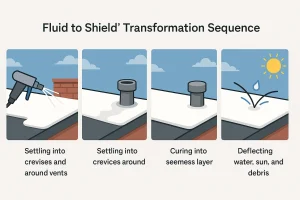
Elastomeric roof coatings are flexible, durable, and adaptable. Made from specialized polymers blended with resins, these coatings start off like thick paint but cure into a rubbery, seamless membrane that clings tightly to the roof surface. This layer acts as a water-resistant shield that can stretch, contract, and remain intact season after season.
A key feature is elasticity. The best coatings flex up to 250–900%—with some formulas reaching an incredible 1,200% expansion before snapping back. That means when your roof expands under July heat or shrinks during January frost, the coating moves with it. No cracks. No leaks. Unlike rigid sealants that crack under pressure, elastomerics stay smooth and intact.
Once it dries, this coating bonds firm and flat—not peeling or bubbling. That’s because it forms a monolithic, fluid-applied membrane across the entire roof . That means even tricky areas—vents, drain pipes, HVAC bases—get fully covered. No seams, patches, or weak joints. Water just rolls off, instead of seeping in.
Many elastomeric coatings are bright white or pigmented with reflective materials like titanium dioxide. As a result, they bounce back 80–90% of UV and infrared rays, sometimes lowering roof temps by 50–60 °F. That’s not just stats—it’s real money saved on air conditioning and cooler indoor conditions throughout summer.
Heat, cold, rain, hail—they’re all weather tests your roof can’t avoid. The elastic nature of elastomeric coatings means they flex rather than fail. Hail bounces. Frost shrugs off. Thermal cycles bounce right off the surface. Most coatings can cushion hail strikes, reduce shrinkage, and survive decades of freeze–thaw cycles.
With proper application—usually 20–30 mils thick—you get 10–20 years of robust, waterproof protection. And when it starts wearing down, you just add another coat, often for half the price of a new roof. It’s a repair cycle that’s easy, quieter, and less intrusive—no tear-off, no downtime.
Roof Coating Care and Maintenance
Taking care of your roof coating isn’t complicated — just a bit of attention now and then can save you from big headaches later. Keep it clean, keep an eye out for small issues, and touch up any wear before it turns into real damage. A well-maintained roof not only lasts longer but keeps your space cooler, quieter, and drier.
Heads-up: Roofs can get slick when wet, especially if you’ve got a light-colored or silicone-coated surface. Morning dew, rain, or even frost can make things unexpectedly slippery — walk with caution.
- Keep Water Flowing: Make sure nothing’s clogging up your drains — even small bits like leaves or dirt can block water flow. If water starts pooling, it increases the chance of leaks, especially if there’s a tiny cut or tear nearby.
- Watch the Foot Traffic: Your roof isn’t built for daily strolls. Too much walking, especially around HVAC units or vents, wears down the surface over time. If someone needs to do work up there, protect the coating with a walkway mat or plywood.
- Mind the Spills: Grease from rooftop units, oil leaks, or harsh cleaning agents can slowly break down your coating. If you spot a spill, clean it up fast. And for equipment that’s known to leak, set up drip pans as a backup.
- Prevent Damage: Need to clear snow? Use a plastic shovel and go slow, especially near walls and flashing. Sharp tools or metal equipment can puncture the surface. And if you’re moving anything heavy, lay down some plywood to spread out the weight safely.
- Tidy Up Debris: Even small bits like screws, nails, or metal scraps can cause damage if stepped on. Clear them off during your routine checks.
A good rule of thumb: schedule two inspections a year — one in the spring and another in the fall. It’s also a must if your roof is under warranty. Hire a licensed roof pro who knows what to look for and ask them to pay close attention to high-risk spots like vents, drains, flashing, and anywhere rooftop units are installed.
If possible, check from inside the building too. Look for signs of leaks — water stains, sagging drywall, or musty smells. And while you’re at it, inspect parapet walls and edges for cracks or signs of water sneaking in.
After big storms or any construction up top, it’s smart to do a quick post-event check too.
How Much Do Elastomeric Roof Coatings Cost?
If you’re thinking about giving your roof some extra protection with an elastomeric coating, you’re probably wondering what it’s going to cost. The short answer? It depends—but most homeowners end up paying somewhere between $1 and $4 per square foot when everything’s said and done. On the low end, with basic prep and easy access, it could be as little as $0.50 per square foot. On the higher side—say, a steep roof or something that needs more prep—you might be looking at $5 per square foot or more.
To put it into real numbers, coating a roof that’s about 1,000 square feet might run you $650 to $5,000. If your roof is closer to 1,500 square feet, you’re probably looking at $975 to $7,000. It’s not pocket change, but it’s a whole lot cheaper than a full roof replacement.
Different roof types influence both the difficulty and cost of installation. Flat roofs are the easiest to work with, and tend to fall on the lower end of the price range. Metal roofs need more prep work—especially for rust prevention—so they’ll cost a bit more. If you have a steep or pitched roof, labor becomes more intensive and you may see a 30–50% bump in price due to the added safety equipment and time required.
But in every case, the return remains strong—because the coating is not just protecting what you have now, it’s delaying the need for expensive repairs or a full replacement later.
If you go with a high-quality reflective coating, you might qualify for Energy Star incentives or even a federal tax credit. In some cases, you could get up to 30% of your material costs covered, with a cap of around $1,500. That’s money back in your pocket—and a nice bonus when you’re already making an energy-smart decision.
FAQs
1. What exactly are elastomeric roof coatings?
Elastomeric roof coatings are durable, paint-like skin you roll or spray onto your old roof. They’re much thicker than regular paint—nearly ten times as thick—so they form a continuous, elastic waterproof layer that stretches as your roof expands and contracts, sealing cracks and keeping water out. That bright, often white color reflects the sun’s rays too, helping reduce heat buildup and easing the strain on your AC .
2. Who should consider using them?
They’re ideal for people with aging flat or low-slope roofs—whether it’s metal, concrete, foam, TPO, or even older membranes. Instead of ripping off the entire roof, a coating can restore protection and extend its life by 10–20 years. It’s also a smarter fit for climates that swing hot or cold, thanks to the coating’s ability to shrink and stretch with temperature changes .
3. How do you apply one?
- Clean everything off. Sweep away debris, then give the surface a power-wash and let it dry—clean prep equals better results.
- Patch problem spots. Use sealant and reinforcing mesh around seams, cracks, and protrusions like vents or pipes.
- Apply the coating. Use a roller or sprayer on a warm, dry day (65°F+). Two coats are ideal—start at the edges, work inward, keep a wet edge, and wait about 24 hours between coats.
4. Do I need a pro—or can I DIY?
Serious prep and technique matter, but if you’re confident with the basics—cleaning, patching, rolling—it can absolutely be a doable weekend DIY. However, for large roofs, tricky details, or tight warranties, a pro’s experience with things like adhesion tests and reinforcement can be worth it .