

Home renovations are stressful enough. Between the dust, delays, and budgets, the last thing you need is to wonder if your contractor is actually qualified to do the job. You’re trusting them with your home and your money — they should at least be properly licensed, right?
But here’s the thing — plenty of people skip that part. Maybe the price sounds tempting, they know someone who “does it cheaper,” or they promise to cut corners and save you time. But shortcuts like that often lead to unfinished work, safety issues, or worse — legal headaches that stick around long after the job’s done.
Most homeowners don’t realize that a Home Improvement Contractor License isn’t just a technicality. It’s protection — for your home, your wallet, and your peace of mind. In places like New York, licensed contractors carry insurance, pass exams, and sometimes post bonds to guarantee they’ll follow through. Some even go through background checks before they can get approved.
And here’s what really matters — in NYC, working without a license isn’t just risky, it’s illegal. Hiring someone unlicensed can leave you stuck if things go sideways. You may have no legal way to get your money back, and in some cases, the contractor isn’t even entitled to be paid.
It doesn’t matter if you’re redoing your kitchen, fixing the roof, building a deck, or even just installing storm windows — chances are, your contractor needs to be licensed. Some smaller projects fall under the same rules, so always double-check before anyone gets to work.
And if you’re a contractor reading this — skipping the license might seem like a way to save time, but it’s not worth it. You could lose your right to payment, face fines, or get hit with legal trouble. It applies to subcontractors too — everyone’s expected to follow the same rules.
Whether you’re a homeowner or a contractor, having the right license keeps everyone protected and keeps your project on track.

What Is a Home Improvement Contractor License — And Who Actually Needs One?
If someone’s getting paid to fix, remodel, or improve your home, they’re considered a contractor. And here in New York City, that means they can’t just show up with a toolbox and good intentions — they need the proper license to do the work legally.
It doesn’t matter if you own the place, rent an apartment, or live in a condo or co-op — if someone’s offering to upgrade your space and charging for it, they fall under NYC’s home improvement rules.
This applies to all kinds of contractors. Maybe it’s just one person running their own small business, maybe it’s a partnership, or maybe it’s a bigger company with a whole crew — either way, the rules are the same. If they’re advertising, selling, negotiating, or doing home improvement work that costs more than $200, they need to have a valid Home Improvement Contractor License from the city’s Department of Consumer Affairs.
The license isn’t just paperwork — it protects you. It helps make sure the people working on your home meet city standards and that there’s accountability if something goes wrong. So whether you’re planning a small repair or a major renovation, checking that your contractor is licensed is always step one.
Read More: Tips to Handle Home Improvement Insurance
Why Do You Even Need a Home Improvement Contractor License in NYC?
In a city like New York, home improvement projects never stop — there’s always a kitchen being remodeled, a roof getting patched up, or someone adding new windows or a backyard patio. But before anyone picks up a hammer or signs a contract, there’s one rule both homeowners and contractors can’t ignore: if you’re getting paid to work on someone’s home, you need the proper license.
It doesn’t matter if you’re working solo, running a small crew, or part of a larger company — the law applies across the board. Whether it’s a quick repair, a full renovation, or upgrades to an apartment, condo, co-op, or house — if money’s changing hands, the contractor needs to be licensed.
Why Is the License Such a Big Deal?
A lot of people think the license is just paperwork or another hoop to jump through — but it’s there to protect everyone. For homeowners, it helps ensure the person working on your space actually knows what they’re doing and meets the city’s standards. For contractors, it keeps the job legal and protects your right to get paid.
If you skip the license, it’s not just about risking a fine. Without it:
- You can’t legally enforce your contract
- You lose your right to demand payment if a homeowner refuses
- You’re looking at serious penalties, and in some cases, legal action
In New York City, working without a license is considered a Class A misdemeanor. That could mean big fines, daily penalties stacking up, and yes — even having your vehicle seized if it’s tied to unlicensed work.
The same rules apply to subcontractors. They need their own license to work legally, even if they’re hired by a general contractor. Employees working under a licensed contractor are usually covered, but independent subcontractors aren’t. And without a license, you lose key protections — like the ability to file a lien if you don’t get paid.
Whether you’re a contractor or a homeowner, skipping the license just isn’t worth the risk.
NYC Home Improvement Contractor License — What You Actually Need to Get Started
If you’re planning to take on home improvement jobs in New York City, there’s one thing you can’t skip — getting your Home Improvement Contractor License. This applies to anyone working on houses, apartments, co-ops, condos, or even outdoor spaces around those properties. If you’re getting paid to upgrade, fix, or remodel — you need to be licensed.
What You’ll Need to Apply
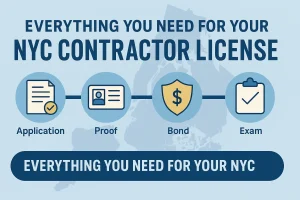
The process sounds complicated, but when you break it down, it’s pretty manageable. Here’s what you’ll need in your corner to get that license approved:
- Your completed license application
- Proof of where your business is located, plus proof of your home address
- A Sales Tax ID number or the confirmation showing you’ve applied for one
- Workers’ Compensation Insurance (or proof that you’re exempt if you have no employees)
- EPA certification if you’re dealing with lead paint, or a signed form saying it doesn’t apply to your work
- Either a $200 fee to enroll in the city’s Trust Fund or a $20,000 Surety Bond for added protection
- A signed agreement saying your contracts meet NYC requirements — plain English, clear terms, all by the book
- Passing the Home Improvement Exam — 30 multiple-choice questions, and you need at least 21 right to pass
- Fingerprinting for background checks
- The license fee
Keep in mind, submitting your application isn’t the final step. They won’t approve your license unless every single requirement is complete.
Other Permits You Might Need
Depending on the work you’re doing, you might need a few extras:
- For sidewalk or street work; you’ll need a permit from the NYC Department of Transportation.
- For big renovations or structural work; you expect to deal with the Department of Buildings for permits.
- For hauling away construction waste; you’ll need to register with the NYC Business Integrity Commission.
Don’t Forget the Business Side
If you’re a sole proprietor, partnership, or corporation, you’ll also need to make sure your business paperwork is sorted. Even if you’re operating under a different name, that name has to be properly registered with the state.
Do it right the first time — it protects you, your clients, and your ability to work legally in NYC.
Bonding and Insurance — What You’ll Need to Be a Licensed NYC Contractor
If you’re planning to apply for your Home Improvement Contractor License in New York City, there are a couple of things you absolutely can’t skip: a surety bond and insurance. Yeah, it’s more paperwork, but this isn’t just about following rules — these things are real protection for your business and your clients when things don’t go as planned (because let’s be honest, stuff happens).
What’s a Surety Bond?
A surety bond is basically your written promise, backed by money, that you’ll get the job done — properly and completely. If you leave a project unfinished, or something goes seriously wrong, your customer can file a claim against that bond to help cover the mess.
In NYC, most contractors are required to carry a $20,000 bond. If you’re running a bigger operation, you might need more. What’s it cost? Usually somewhere between $200 and $500 a year, depending on your credit. You get the bond through a licensed bonding company — think of it like insurance for your reputation.
General Liability Insurance
This is your safety net for all those “uh-oh” moments. If there’s property damage, someone gets hurt, or an accident happens on-site, your insurance covers it. Most contractors carry at least $1 million in coverage, but depending on the size of your projects, you might need more.
Without a bond and proper insurance, your license application gets tossed aside — simple as that. Worse? If you try to take on jobs without them, you’re opening yourself up to lawsuits, fines, and a mountain of headaches.
At the end of the day, these aren’t just legal boxes to tick. They protect your business, your clients, and your reputation. Plus, having them shows you’re serious about your work — and in a city like New York, that means everything.
How to Get Your Home Improvement Contractor License in NYC (Without the Headache)
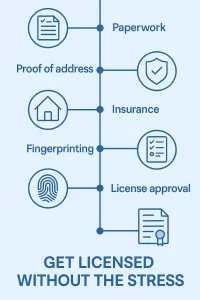
If you’re ready to start working legally as a licensed home improvement contractor in New York City, there’s a process to follow. But don’t stress — I’ll break it down for you!
- Step 1: Fill Out the Application: First things first, you’ll need to complete your application. You’ll give them the basics — your company name, your business address, your Tax ID (EIN), and your New York Sales Tax Number. If you haven’t applied for your Sales Tax ID yet, you’ll need the confirmation number showing you’re in the process. They’ll also want to know your business type — whether you’re a sole proprietor, LLC, corporation, or partnership. Once you’ve got your paperwork together, you can apply in person at one of NYC’s offices (by appointment), or save yourself the trip and apply online.
- Step 2: Show You’re Registered for Sales Tax: The city wants proof that you’re registered to collect sales tax — pretty standard. If you’ve already got your Sales Tax ID, you’re good to go. If not, head over to New York’s Business Express site, get registered, and hang onto your confirmation number — you’ll need it.
- Step 3: Prove Your Business Address: You’ll need to show where your business is based. A utility bill, lease, mortgage statement, insurance papers, or even government mail works — as long as it clearly shows your business address and matches up with your application.
- Step 4: Prove Where You Live: They also want to know your home address. Same deal as your business — bring a utility bill, lease, mortgage statement, or government mail. If you’re living with someone else, like family or a roommate, get a signed letter from them confirming you live there, plus one of those proof documents.
- Step 5: Workers’ Comp Coverage: If you have employees, you need Workers’ Compensation Insurance — no way around it. It protects your team if someone gets hurt on the job. You can get this through an insurance broker or the New York State Insurance Fund. If you don’t have employees and qualify for an exemption, you’ll need to show that paperwork.
- Step 6: EPA Certification (If Required): Depending on your work, you might need EPA certification, especially if you’re dealing with older homes or lead paint. You’ll either submit your Renovation and Lead Abatement certificates or sign a form saying your work doesn’t require them. The city just wants to be sure everyone’s working safely.
- Step 7: Choose Between the Trust Fund or a Bond: To protect homeowners, NYC requires you to either pay $200 to enroll in the city’s Home Improvement Trust Fund or secure a $20,000 Surety Bond. If you go the bond route, you’ll need to show proof that it’s paid and active.
- Step 8: Sign the Compliance Agreement: This agreement says you’ll follow NYC’s rules when writing contracts for your clients — clear timelines, payment schedules, warranties, and all the fine print written in plain English. It protects both you and your customers.
- Step 9: Pass the Home Improvement Contractor Exam: Once your paperwork is accepted, you’ll need to pass the contractor exam — it’s 30 multiple-choice questions, and you’ll need at least 21 correct to pass. Only one person from your business needs to take the test — like the owner, partner, or someone with at least 10% ownership. If you don’t pass the first time, no worries — you can retake it (you’ll just have to pay the fee again).
- Step 10: Authorize Someone to Apply for You (Optional): If someone else is handling the application process for you, you’ll need to fill out a Granting Authority to Act form. That gives them permission to submit everything on your behalf.
- Step 11: Get Fingerprinted: Everyone involved — owners, directors, partners, and shareholders with 10% or more ownership — needs to be fingerprinted. You’ll schedule your appointment, bring your application number, and the whole process takes about 15 minutes.
- Step 12: Pay the License Fee: The license always expires on February 28th of odd-numbered years. The fee depends on when you apply, but it’s around $100 to get started. You can pay in person or online — just know there’s a small extra fee for credit card payments.
How Much Does It Actually Cost to Get Your NYC Home Improvement Contractor License?
Getting your Home Improvement Contractor License in NYC isn’t just about the paperwork, there are some upfront costs too. The good news? Most of the fees are pretty simple and predictable. Here’s a quick breakdown of what you’ll be looking at, plain and clear — no confusing legal talk.
License Application Fee — $50
First up, you’ll need to pay $50 when you apply for your license. It’s the same price whether this is your first time applying or you’re renewing. You can pay online or in person when you submit your paperwork — no surprises there.
Home Improvement Exam Fee — $50
If you’re applying for the first time, you’ll also need to pass the Home Improvement Contractor Exam. It costs $50 to take the test — it’s 30 multiple-choice questions, and you’ll need to get at least 21 right. Don’t stress if you don’t pass on the first try — you can retake it, but you’ll need to pay the fee again each time.
DCWP Trust Fund or Surety Bond
Here’s where you’ve got options. The city wants to make sure homeowners are protected if something goes wrong on the job. You can either:
- Pay $200 to join the NYC Home Improvement Contractor Trust Fund
OR - Get a $20,000 Surety Bond, which usually costs around $100 to $500 a year depending on your credit
The Trust Fund fee is a one-time payment when you apply. The bond acts as insurance for your customers — if a project goes sideways, they’re covered.
Fingerprinting Fee — Around $101.75
Anyone with ownership in your business (owners, partners, directors, etc.) needs to get fingerprinted as part of the background check process. It’s quick, easy, and costs just over $100. You’ll schedule your appointment with IdentoGO.
A Few Other Costs to Keep in Mind
While not required for the license itself, most clients — especially in NYC — expect contractors to carry extra insurance, like:
- General Liability Insurance
- Additional Workers’ Compensation (if you’ve got employees)
It’s not mandatory from the city, but having insurance shows clients you’re legit and can help you land more jobs.
Quick Example of Your Upfront Costs
| Expense | Estimated Cost |
| License Application Fee | $50 |
| Home Improvement Exam Fee | $50 |
| DCWP Trust Fund (or Surety Bond) | $200 (or ~$100) |
| Fingerprinting | ~$101.75 |
| Total First-Time Cost | Around $400–$500 |
Keep in mind, renewals down the road are usually cheaper — mostly just the $50 license fee unless other things change.
The Real Cost of Skipping Your Contractor License in NYC
Working as a contractor in NYC without the proper license is basically asking for trouble. The city doesn’t look the other way, and trust me, the fines? They’re steep enough to wreck your wallet fast.
Working Without a Permit on Small Residential Jobs
If you’re doing work on a one- or two-family home without the right permits, the penalties can hit hard. The city charges six times the amount you should’ve paid for the permit. The minimum fine starts at $600, but depending on the situation, it can climb all the way to $10,000. Imagine paying that just for skipping a permit — money better spent growing your business or paying your crew.
Working Without a Permit on Larger Projects
Got your eye on bigger jobs — like apartment buildings, commercial spaces, or larger residential properties? The fines get even nastier. For those jobs, NYC charges twenty-one times the permit fee you skipped. And the fines? They start at $6,000, topping out at $15,000. That’s a huge hit for cutting corners.
Where (and How) You Pay Those Fines
If you do end up with a violation, you’ll pay the fine at the Borough Office that issued your notice. The city accepts credit cards, certified checks, or money orders — but honestly, avoiding the fine altogether by following the rules is the better move.
Are There Ways to Get Penalty Waivers?
Sometimes, yes — but don’t count on it. The city occasionally offers waivers or reductions, but those opportunities are handled separately and aren’t guaranteed. If that applies, you’ll need to stay on top of city notices to know when those windows open.
NYC isn’t messing around with unlicensed contracting work. Getting licensed takes a little time and paperwork, sure — but compared to risking $10,000 or $15,000 in fines? It’s not even a question.
Common Mistakes to Avoid When Applying for Your NYC Home Improvement Contractor License

Even when folks try to do things the right way, little slip-ups can slow down your license approval. Here are a few common mistakes to steer clear of:
- Incomplete Paperwork: Double-check your application and make sure every document is included. Missing one thing can stall the whole process.
- Wrong Bond or Insurance: You’ll need the correct surety bond and proper insurance in place. Guessing or using the wrong provider can delay approval.
- Background Check Surprises: If there’s anything on your record, get ahead of it. Addressing issues early keeps your application from getting stuck.
- Late Renewals: Don’t leave your renewal to the last minute. If you forget or delay, NYC can suspend or revoke your license.
Taking your time to get it right now saves way more time (and stress) later.
Ready to Get Licensed?
Getting your Home Improvement Contractor License in NYC might seem overwhelming at first, but with the right prep, it’s totally manageable. It protects your business, keeps you compliant with city laws, and builds trust with your clients.
Cover your bases — from bonding and insurance to background checks and paperwork — and you’re setting your business up for long-term success.
FAQs
How do I actually find a contractor I can trust?
The best way to start is to talk to anyone you know who’s recently had similar work done. Honest recommendations from people you trust are worth more than any fancy ad.
Once you’ve got a few names, always get at least three written estimates for the same project. That way, you’re comparing apples to apples — same work, same materials, same timelines. No hidden surprises.
And don’t just assume someone’s legit because they have a nice truck or slick website. Double-check their license with your local consumer protection office, and while you’re at it, look them up on the Better Business Bureau. You’ll spot any red flags like unresolved complaints.
Here’s another smart tip — ask their suppliers if they pay their bills on time. If they’re behind with suppliers, it could lead to delays or trouble on your project. And always, always make sure they’re clear on permits — a good contractor knows when they’re needed.
What kind of insurance should my contractor carry?
Non-negotiable — your contractor needs personal liability, property damage, and workers’ comp insurance. No exceptions. Ask for proof before they start. This protects both of you if something goes wrong — someone gets hurt, there’s property damage, you name it.
It’s also a good idea to call your own insurance company and double-check what you’re covered for during the project.
Can I trust contractors just because they advertise online or in the Yellow Pages?
Not automatically. Ads might look polished, but they don’t prove anything about licenses, skills, or reputation. Always do your homework. Verify their license, check reviews, and ask around.
The best contractors earn their reputation by doing solid work — not just by running flashy ads.
How do I actually check a contractor’s references?
Don’t skip this — hearing from real past clients is one of the smartest moves you can make. Ask if you can visit the finished project. Seeing the work with your own eyes tells you way more than a brochure ever will.
When you chat with their references, ask how it all went. Did the contractor stick to the timeline? Did they communicate well? Were there surprise costs, and how were those handled? And little details matter too — did the crew show up on time, did they clean up after themselves?
Does having a license really matter that much?
Yes, in places like NYC, it’s illegal for a contractor to take payment for home improvement work without the proper license. Even if they get one later, it doesn’t make unlicensed work okay.
And no, they can’t “borrow” someone else’s license either. Always ask to see it, and make sure it’s valid and current before you sign anything.
Is there anything they have to do before they start the job?
Definitely. Even licensed contractors need to get the right permits before they start. Permits protect both sides and make sure everything meets safety standards. They also need to post a money bond — it’s basically a backup promise to get the job done right.
If your contractor shrugs off the permit process, that’s your cue to walk away.
Should I get everything in writing before they start?
100% yes. A handshake isn’t enough — you need a clear, signed contract before any work begins. It should spell out exactly what’s included, payment schedules, timelines, warranties — all of it.
It might feel tempting to keep it casual, but if something goes sideways, an oral agreement won’t help you much. Get it all in writing to protect yourself.